Happy 100th Birthday Celebration for Marvel Legend Stan Lee

Stan Lee as Artist and Producer — The Man “Behind” Marvel’s Success
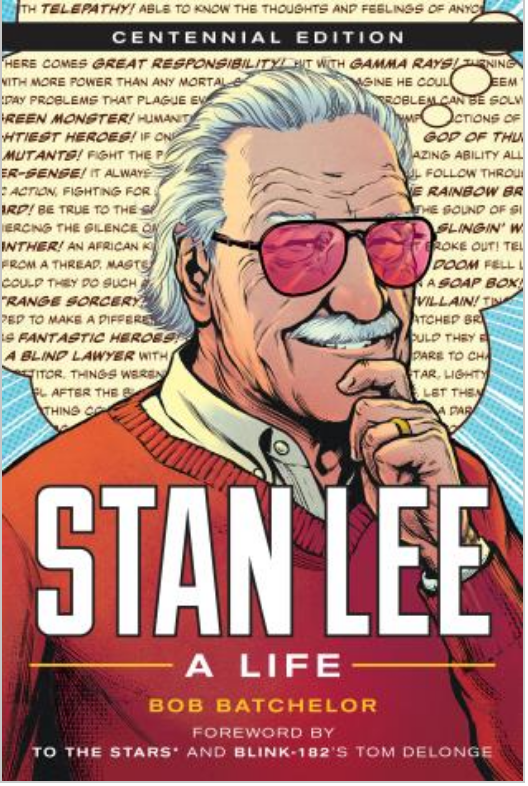
Stan Lee: A Life by cultural historian Bob Batchelor

Stan Lee had been working in the comic book industry for decades before the successes of the 1960s. Lee’s most important lessons from those first two-plus decades in comic book publishing were about how to manage a business, the seemingly simple on paper, but difficult in practice nature of running a company.

Comic book publishing was not for the meek – governed by relentless deadlines in an era before technology made many of the processes more efficient. While not trained in business, Lee became a manager, which gave him insider perspective into the machinations of the industry, particularly in contrast to the artist or writer view that is solely on their specific creation. From an enterprise perspective, Lee learned everything that would enable him to re-launch Marvel in the early 1960s, ultimately overseeing the company as it became a force in comic books and later, American popular culture as a whole.

Yet, if we were just discussing Lee as an editor and manager of Marvel, the story would be truncated. Of course, he was also a creator, as were so many of the early comic book artists and writers, more or less forced into developing managerial acumen, because, well someone had to run the business side. What emerged in Lee as a result of the melding of the business and creative parts of his work life was a keen sense of responsibility. He had to nurture the artistic aspects of comic book creation, from writing and editing to assigning cover art and lettering, while also overseeing the business side, from managing budgets to working with the production team to ensure deadlines were met in an industry with slim margin for error. Ultimately, all responsibility wrapped back to Lee.

Rather than these viewpoints warring inside Lee as he built his career, he used them as a way to create a central worldview: Comic books were important as tools to educate. They had value for readers – regardless of age – as a means of education, including outlining a value system based on the complexity of the human experience, not unlike literature and poetry. Lee realized that this perspective stood in contrast to the mainstream opinion that comic books were “pulp,” simple stories aimed at children and feeble-minded adults (a common belief through the 1960s).

Without going into deep analysis of the controversial creation of Spider-man – an amalgamation of the thinking and experiences lived by Lee, Steve Ditko, Jack Kirby – the character’s popularity provided Lee with an instrument to explore his ideas about how important comic books could be as tool for education. Spider-man gave him influence and proved that he could help shape culture in ways unimaginable during the first 20 years of his career.

Continually attempting to establish Marvel as different, Lee started calling the company the “House of Ideas,” which stuck with journalists and became part of the company’s cachet. If a downside existed in the surge of Marvel comics into the public consciousness it is that Lee and his bullpen teammates had to balance between entertainment, social issues, and profitability. Stan valued the joy derived from reading comics, but he wanted them to be useful: “Hopefully I can make them enjoyable and also beneficial…This is a difficult trick, but I try within the limits of my own talent.” Lee wanted to have it both ways – for people to read the books as entertainment, but also be taken seriously.

Hopefully I can make them enjoyable and also beneficial…This is a difficult trick, but I try within the limits of my own talent.
— Stan Lee

At the same time, Marvel had to sell comics, which meant that little kids and young teenagers drove a sizeable chunk of the market. In 1970, Lee estimated that 60 percent of Marvel’s readers were under 16-years old. The remaining adult readership was enormous given historical numbers, but kept Lee focused on the larger demographic. “We’re still a business,” he told an interviewer. “It doesn’t do us any good to put out stuff we like if the books don’t sell…I would gain nothing by not doing things to reach the kids, because I would lose my job and we’d go out of business.”

 On one hand, the industry moved so quickly that Lee and his creative teams constantly fought to get issues out on time. The number of titles Marvel put out meant that everyone had to be constantly producing. So, when Lee was in the office or working from home, he committed to getting content out. Roy Thomas recalls, “Stan and I were editing everything, and the writers were editing what they did, and we had a few assistant editors that didn't really have any authority...that was about it.” However, that chaotic atmosphere made it rife for animosities to form or fester. Lee needed content out the door and Goodman tried to maintain control over cover artwork and other little details that inevitably slowed down the process.

Thomas’ ascension and Lee’s pull toward management did shift the editorial direction, if for no other reason than that Stan wouldn’t be writing full-time any longer. “It was time to kind of branch out a little bit,” Thomas explained. “We wanted to keep some of that Marvel magic, and at the same time, there had to be room for other art styles and other writing styles.” The most overt change came when Lee turned in the copy for The Amazing Spider-Man #110. The late 1971 issue was the last Lee wrote for the character. Writer Gerry Conway succeeded Lee and the next books in the series would be co-created by Conway and star artist John Romita.

While many adults looked down on Lee for writing comic books, especially early in his career, he developed a masterful style that rivals or mirrors those of contemporary novelists. Lee explained:

Every character I write is really me, in some way or other. Even the villains. Now I’m not implying that I’m in any way a villainous person. Oh, perish forbid! But how can anyone write a believable villain without thinking, “How would I act if he (or she) were me? What would I do if I were trying to conquer the world, or jaywalk across the street?...What would I say if I were the one threatening Spider-Man? See what I mean? No other way to do it.”

 Lee’s distinctive voice captured the essence of his chosen medium.

Lee also understood that the meaning of success in contemporary pop culture necessitated that he embrace the burgeoning celebrity culture. If a generation of teen and college-aged readers hoped to shape him into their leader, Lee would gladly accept the mantle, becoming their gonzo king. Fashioning this image in a lecture circuit that took him around the nation, as well as within the pages of Marvel’s books, Lee created a persona larger than his publisher or employer. As a result, he transformed the comic book industry.

Unlike Bob Dylan or Jann Wenner, for example, Stan didn’t plan this revolution. He didn’t say to himself that he would cocreate a character that would become part of American folklore. It wasn’t planned, yet it seems completely intentional.

Baby boomers grew up with Stan’s voice in their heads. Interestingly, Lee spoke for Marvel’s superheroes to eager audiences talking about the characters, while at the same time creating the dialogue in the actual comics. So he was the person talking about the characters he himself was voicing. In addition, he wasn’t just in the media; Stan was talking directly to readers within the pages. He was Spider-Man’s voice, while also talking about the comics, the company, his colleagues, and the world to a captivated audience.

By the time Gen Xers started reading comics, Marvel’s style was wholly entrenched. As each generation ages out of traditional comic book reading age, Lee’s voice becomes commensurate with nostalgia—a part of our lives we look back to with fondness and equate with better times. Immersed in a heavily capitalistic, entertainment-driven culture, embedded stories are ones that get retold, and Marvel superheroes become a balm for a cultural explosion driven by cable television, global box office calculations, and the web. In what seems like the blink of an eye, the Marvel voice became the voice of modern storytelling.

Why did the Marvel Universe come to dominate global popular culture? Largely based on Stan supplying a voice to a mythology. Certainly, the creation of the Marvel Universe was a team effort, like all forms of entertainment, nothing is created in a vacuum. There are unheralded people in the process and those who deserve as much credit as Lee for their roles. Yet, it was the unmistakable “music” that Lee conceived that launched a cultural revolution.

Crisscrossing the nation while speaking at college campuses, sitting for interviews, and conversing with readers in the “Stan’s Soapbox” pages in the back of comic books, Lee paved the way for intense fandom. His work gave readers a way to engage with Marvel and rejoice in the joyful act of being a fan. Geek/nerd culture began with “Smiley” and his Merry Marauding Bullpen nodding and winking at fans each issue. Lee’s commitment to building a fan base took fandom beyond sales figures and consumerism to authentically creating communities. The Marvel Cinematic Universe has spun this idea into global proportions. It is the fans of the MCU across film and television that has reinforced and spread Stan’s voice across the world.
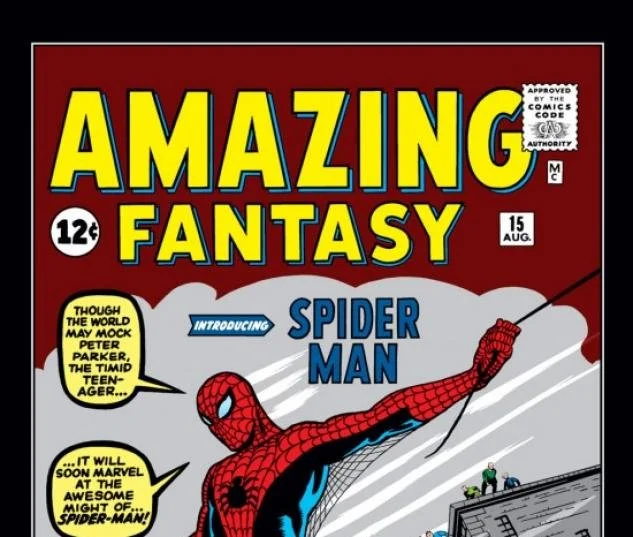
Amazing Fantasy #15, the comic that launched Spider-Man into the popular culture stratosphere

The superheroes that Lee and his co-creators brought to life in Marvel comic books remain at the heart of contemporary storytelling. Lee created a narrative foundation that has fueled pop culture across all media for nearly six decades.

By establishing the voice of Marvel superheroes and shepherding the comic books to life as the creative head of Marvel, Lee cemented his place in American history. According to analyst Paul Dergarabedian, the results have been breathtaking: “The profound impact of Stan Lee’s creations and the influence that his singular vision has had on our culture and the world of cinema is almost immeasurable and virtually unparalleled by any other modern day artist.”
The profound impact of Stan Lee’s creations and the influence that his singular vision has had on our culture and the world of cinema is almost immeasurable and virtually unparalleled by any other modern day artist.
— Paul Dergarabedian

Morrison Arrested Onstage in New Haven -- Beginning of the End

Jim Morrison’s arrest in December 1967 while on stage at the New Haven Arena is important in understanding the Sixties. The incident represents how myriad people and institutions in a position of power were willing to use their authority to stamp out or thwart those who symbolized something they didn’t understand or even attempt to comprehend. For those wielding a hammer, as is said, everything looks like a nail. The establishment’s reaction to Morrison and the Doors was to look at them as something evil that had to be stopped.

Read more

Happy Birthday Jim Morrison -- The Legendary Dark Knight of American Rock Music History

The “real” Jim Morrison comes to life in Roadhouse Blues: Morrison, the Doors, and the Death Days of the Sixties by award-winning cultural historian Bob Batchelor. December 8 is Jim Morrison’s birthday. He would have been 79 years old. His death at 27 is part of rock music folklore and pop culture history, but what a tragedy.

Read more

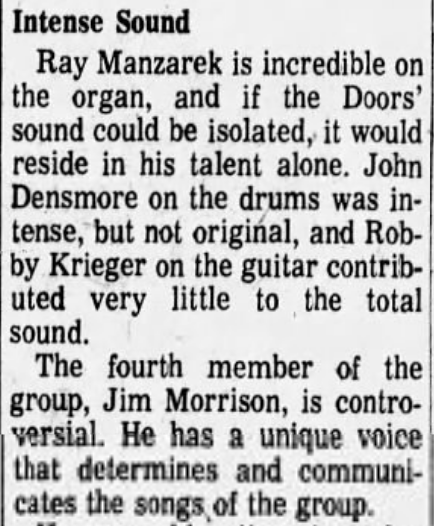
DOORS CONCERT REVIEW -- 55 YEARS AGO!

“Primitive, Grotesque, and Blatantly Sexual”

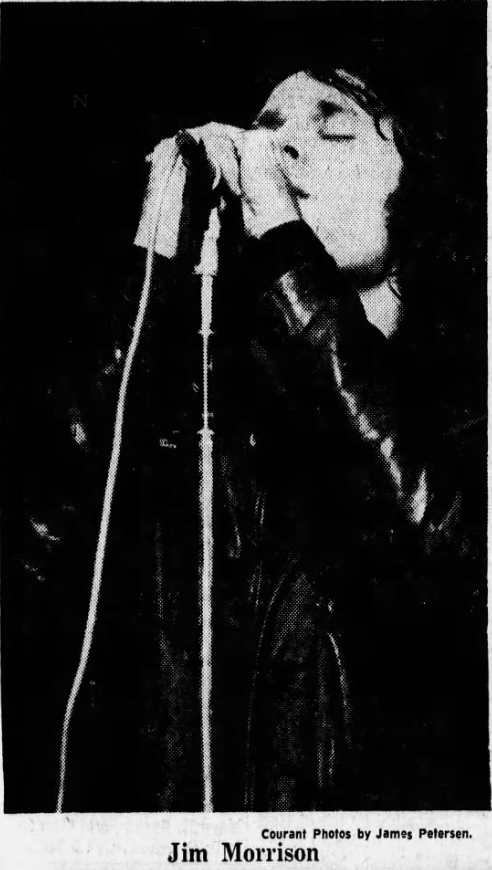
Jim Morrison, lead singer of the Doors

Jim Morrison, lead singer of the Doors, Hartford, December 2, 1967

Hartford Courant reporter James Petersen was not a fan of The Doors. In his review, published 55 years ago on December 2, 1967, he centered on then-accepted notion that anything from California was odd and drug-addled. “Beautiful, beautiful” is most certainly a drug reference, his indication of how a high Californian would react to the spectacle of the band and its leather-clad singer.

Harsh criticism of the Doors concert

Rather than declare the Doors bad, Petersen puts his opinion in the mouth of an older “ticket seller,” who he believes would see the band, audience, and performance as “primitive, grotesque, and blatantly sexual.” What the reporter wants the reader in conservative Hartford, Connecticut, to understand is that the Doors and Jim Morrison are dangerous. The coded language is the type the band often faced when looked at by those who represented the establishment or “traditional” values.

In other words, devalue the band and its members as both musicians and people: fear the grotesque and outlaw the sexual.

The drumbeat against the Doors and Morrison picked up pace in late 1969, especially after Morrison was arrested on stage in New Haven just one week later. The entire nation — and the federal government — would turn against the Doors, a slippery slope that would be the catalyst for Morrison’s untimely death just three and a half years later.

The reporter is obviously an organ fan…he loves Ray’s organ!

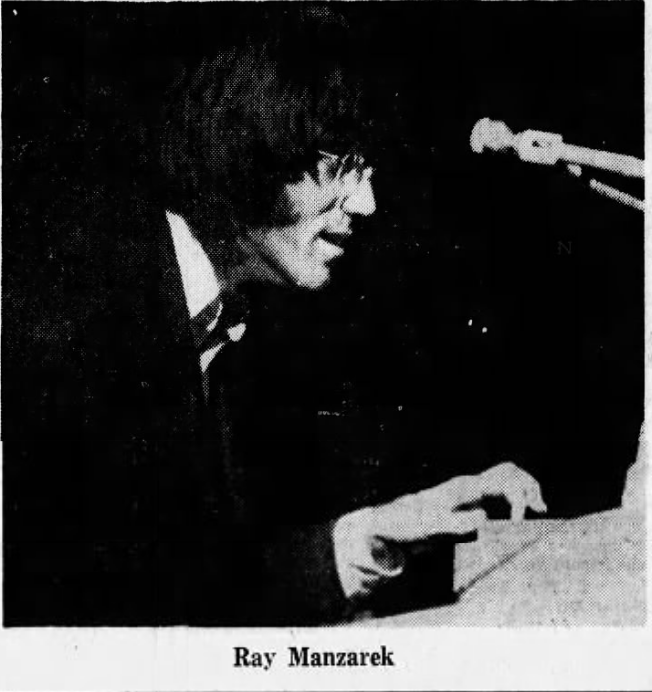
Surprisingly, the only member of the Doors that the reporter enjoyed was Ray Manzarek’s organ. The irony here is that Ray’s driving sound, ranging from dark and eerie to carnival-like and filled with joy, was the sound of the band. How could they be primitive if he liked their essential sound?

Ray Manzarek — “Keyboardist” of the Doors and mastermind of their unique sound!

When Petersen did opine on where he ranked the Doors versus other bands, he ranked them lower than both Procol Harum and the Paul Butterfield Blues Band.

Read the story of the Doors and the Death Days of the Sixties in Roadhouse Blues, published by Hamilcar Publications! For the holidays, the book has been discounted to $15 when ordered at: https://indiepubs.com/products/roadhouse-blues/

JIM MORRISON ARRESTED -- AGAIN

With Miami Indecency Trial Looming, Jim Morrison Arrested on Flight and Faces Federal Charges

Jim Morrison couldn't stay out of trouble, especially when actor Tom Baker was instigating. They got really drunk and rowdy on a flight to Phoenix to see the Rolling Stones, but instead, got arrested and in serious jeopardy when charged with felony offenses.

Jim Morrison -- Arrested Again

Jim Morrison -- Arrested Again

Between March 5, 1969, when acting Miami police chief Paul Denham took warrants out on Jim, and the start of the trial on August 10, 1970, the federal government, the state of California, and the state of Florida tried several legal maneuvers to get the Doors front man to submit. At the same time, Jim’s attorney, Max Fink, fought these efforts, including filing several motions to dismiss the case.

"Too High in Sky" -- Jim Morrison Arrested & Jailed in Phoenix

"Too High in Sky" -- Jim Morrison Arrested & Jailed in Phoenix

While the wrangling sped along, Morrison’s personal life continued to unravel. He was arrested twice more in that seventeen-month span, first in November for causing a disturbance on a flight and then later the next August for public drunkenness in West Hollywood (when a sixty-eight-year-old woman found him sleeping on her porch and called police). According to Ray Manzarek, "Between Miami and Phoenix, Jim was facing a maximum of over thirteen years in prison."

"Arrested here" -- Morrison Faces Federal Offense

"Between Miami and Phoenix, Jim was facing a maximum of over thirteen years in prison."

— Ray Manzarek

For more great stories, interesting analysis, and an in-depth look at the Doors and Jim Morrison, check out Roadhouse Blues: Morrison, the Doors, and the Death Days of the Sixties (Hamilcar Publications)

Roadhouse Blues by Cultural Historian Bob Batchelor


EXCLUSIVE -- Excerpt from Stan Lee: A Life

Exclusive! Read Excerpt From Stan Lee: A Life by Bob Batchelor

Fans who have been waiting to catch Stan Lee: A Life by award-winning cultural historian and biographer Bob Batchelor can now read an exclusive excerpt at Forces of Geek, one of the premiere pop culture websites publishing today. Over the years, millions of fans have been entertained by FOG, which delivers outstanding columnists and opinion, reviews, and insightful analysis of geek culture from today and our nostalgia-tinged youths.

Exclusive! Read an Excerpt From ‘Stan Lee: A Life’ by Bob Batchelor

Exclusive! Read an Excerpt From Stan Lee: A Life by Bob Batchelor

Stefan Blitz is FOG editor-in-chief. In the introduction to the excerpt, he also revealed that Batchelor “will be joining the site next year.” He will be writing a column on Gen X and other popular culture topics.

On Stan Lee: A Life, Blitz explains, “Take the opportunity to check out an exclusive excerpt from his fantastic book, which might be the last word on one of pop culture’s most inimitable icons.”

The excerpt, “How the Marvel Universe Conquered the Globe,” is the first chapter from Stan Lee: A Life.

Stan Lee: A Life by cultural historian Bob Batchelor

Forces of Geek — your home to discover and embrace the unknown, the forgotten, and the beloved from popular culture — has published an exclusive excerpt from Stan Lee: A Life (Rowman & Littlefield, 2022).

“While there are generations of great science fiction films and action movies, the difference between the Marvel Cinematic Universe (MCU) and the others is voice…The Marvel feeling is so ingrained in the heads of fandom that it feels subconscious. It’s driven by Lee’s voice. No matter who directs an MCU film or plays a superhero or supervillain, the internal consistency prevails: Thor’s humor and stilted formality, Iron Man’s snark, Spider-Man’s relentless patter and earnestness. This is Stan’s enduring legacy.”

— Bob Batchelor

While some readers might never have thought of the term “voice,” Batchelor breaks it down via the way the concept is outline by eminent writer Jerome Charyn, one of the most important voices in American literature today.

Charyn describes voice as “music.” Charyn’s concept, although focused on books, can be applied to Lee’s comic book writing:

“Writing…is about the music, it’s about the voice. This is what predominates. The music is all, the music is total, it’s absolute.”

— Jerome Charyn

Stan’s dialogue provided Marvel with a kind of music that readers could hear and matched their internal rhythms, resulting in an experience that transformed them. “It’s music alive with extreme sympathy,” Charyn explained, “there is no space between you and the text.” As a result, readers could feel the Marvel style, while simultaneously that Lee patter paralleled the cultural explosion booming across society. We hear this in the Beatles’ “Sgt. Pepper’s Lonely Hearts Club Band,” Stanley Kubrick’s Dr. Strangelove and 2001: A Space Odyssey, and J. D. Salinger’s short stories.

Meet Stan Lee -- October 12, 1991

Stan Lee and Spider-Man together at 1991 book signing event

Meet Stan Lee!

Meet Stan Lee!

From the early 1960s until his death in 2018, Stan Lee was different than other celebrities — approachable and committed to staying connected to the fans that helped build Marvel into a global brand.

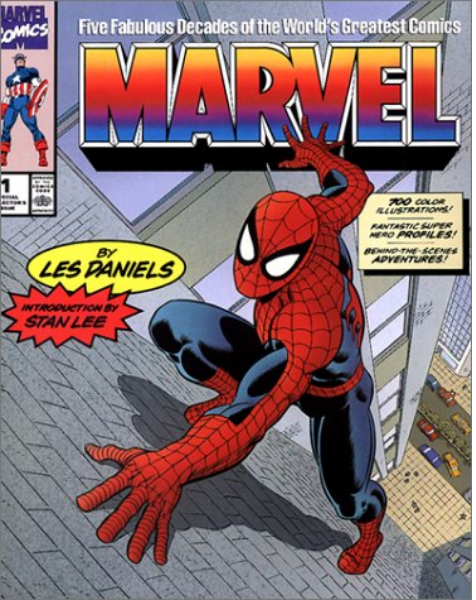
Les Daniels’ book — Marvel: Five Five Fabulous Decades of the World's Greatest Comics not only gave fans an inside look at Marvel’s history, but for those fans lined up at the Paramus Barnes & Noble, they were in for a treat — meeting Stan and Spider-Man!

Two heroes for the price of one!

To learn more about the Marvel maestro’s amazing life, please read Stan Lee: A Life, available wherever you like to purchase books.

Spider-Man Film Rights Tangled in Web (of Lawsuits) -- October 11, 1998

Stan Lee believed in Spider-Man as a film franchise, but the rights were tangled in a web of lawsuits

Spider-Man film rights stuck in legal quagmire

Spider-Man film rights stuck in legal quagmire

Stan Lee had a vision — an entire Marvel Universe on screen! He had worked for decades to get Hollywood executives and studio heads to believe him. As always, he placed his faith in his most successful co-creation — Spider-Man.

Stan Lee with his number one creation -- Spider-Man

Stan Lee with his number one creation -- Spider-Man

Even a person as optimistic as Stan had a difficult time keeping his cool as a series of productions companies bought the rights to Spider-Man, but then fell into development hell as they attempted to figure out just how to bring the web-slinger to life.

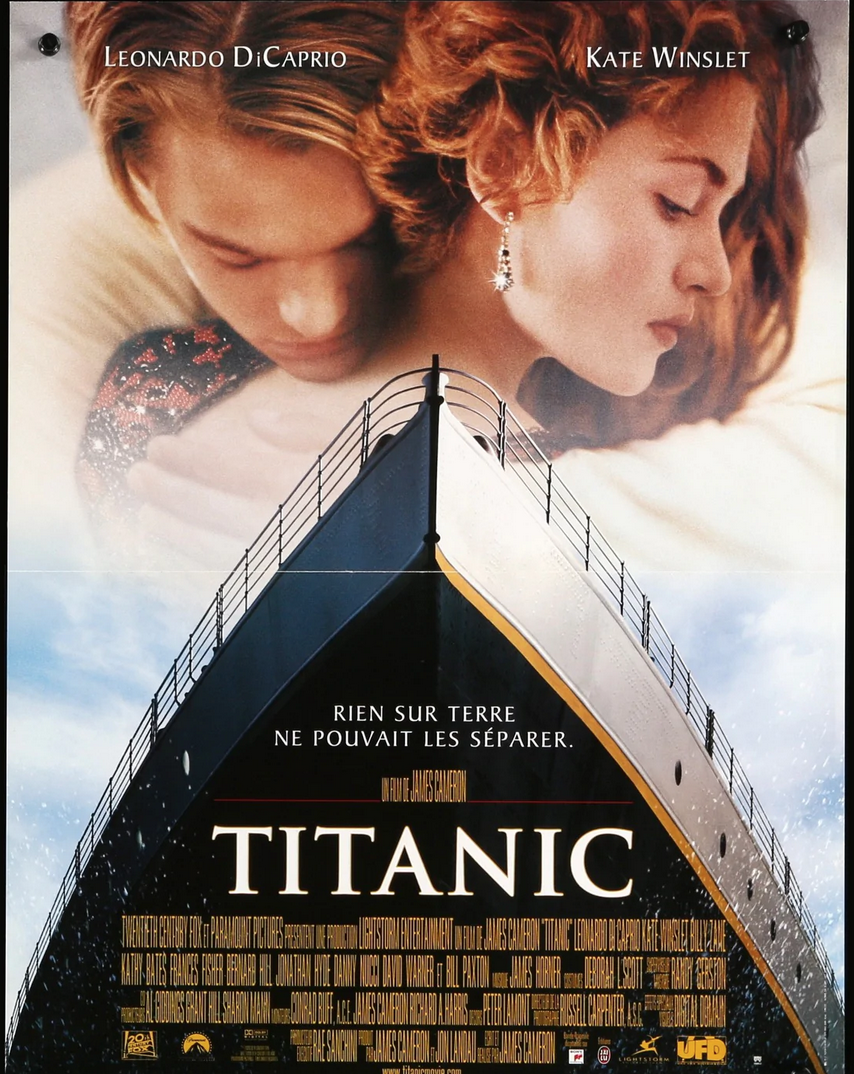
The extensive licensing and rights deals attached to the character led to a series of high-profile lawsuits that stalled progress and infuriated Lee. At various points the legal battles included many of Hollywood’s greatest names, from MGM and Viacom to Sony and 21st Century. Even the great James Cameron — who would later become a hit-maker based on Titanic (1997) — couldn’t move the mountains necessary to make a Spider-Man film based on his 1991 treatment.

Stan Lee hoped James Cameron would make a Spider-Man film

Stan Lee hoped James Cameron would make a Spider-Man film

The legal battles were not cleaned up until early 1999, when Columbia Pictures acquired the rights to all previous Spider-Man scripts in a deal with Metro-Goldwyn-Mayer and Sony then purchased the rights from MGM. Sam Raimi was hired to direct the Tobey Maguire-starring vehicle in 2000 and the film came out two years later.

Spider-Man (2002) is finally made!

Spider-Man was 2002’s highest grossing film, generating more than $407 million in North America, while earning a staggering $418 million overseas. Wiping out all the doubts about whether a superhero film might work, Spider-Man soon became the highest-grossing superhero film of all time after its release, both domestically and worldwide.

Spidey turned Stan Lee’s dream into a reality!

To learn more about the Marvel maestro’s amazing life, please read Stan Lee: A Life, available wherever you like to purchase books.

Stan Lee Predicts Marvel's Future -- 50 Years Ago Today

Stan Lee Predicts Marvel’s Future in 1972!

Newspaper article on Marvel superheroes featuring Stan Lee

Newspaper article on Marvel superheroes featuring Stan Lee

The power and global influence of the Marvel Cinematic Universe is pervasive today, but imagine having nearly every door in Hollywood slammed in your face at the mere thought that anyone would want to see Marvel superheroes on the big screen.

This was Stan Lee’s reality 50 years ago in 1972, even though comic books were a $200 million industry at the time. Ironically, the Dallas Times Herald journalist who interviewed Stan was named Bill Marvel, a daily reporter who had started his career in 1961, at the dawning of the Marvel comic book renaissance, which began with the launch of the Fantastic Four, co-created with artist Jack Kirby.

Stan Lee is prescient in forecasting Marvel's future

Stan Lee is prescient in forecasting Marvel's future

Despite being roundly ignored (or laughed out of the room) by Hollywood executives, Lee persevered, asserting that Marvel was in the midst of a major transformation from comic book company to media “hot property.”

Although he could not get producers to agree, Stan told the journalist that he viewed television and film as the future of the company. He was betting his own future on that vision after a lifetime in creating comic books and decades ahead of his peers at Marvel or in the entertainment industry.

“The next phase is where the much bigger money might lie.”

— Stan Lee

Stan Lee with the book Origins of Marvel Comics

Stan Lee with the book Origins of Marvel Comics

Stan certainly did not have a crystal ball, but his tireless dedication to the basic notion that adults would enjoy films centered on Marvel superheroes eventually transformed the film industry around the globe. Lee was just decades ahead of his time!

To learn more about the Marvel maestro’s amazing life, please read Stan Lee: A Life, available wherever you like to purchase books.